When we hear the words "food security" we often think of agriculture, government policies, food prices, or international reports. But for the average Nigerian, food security is much simpler than that.
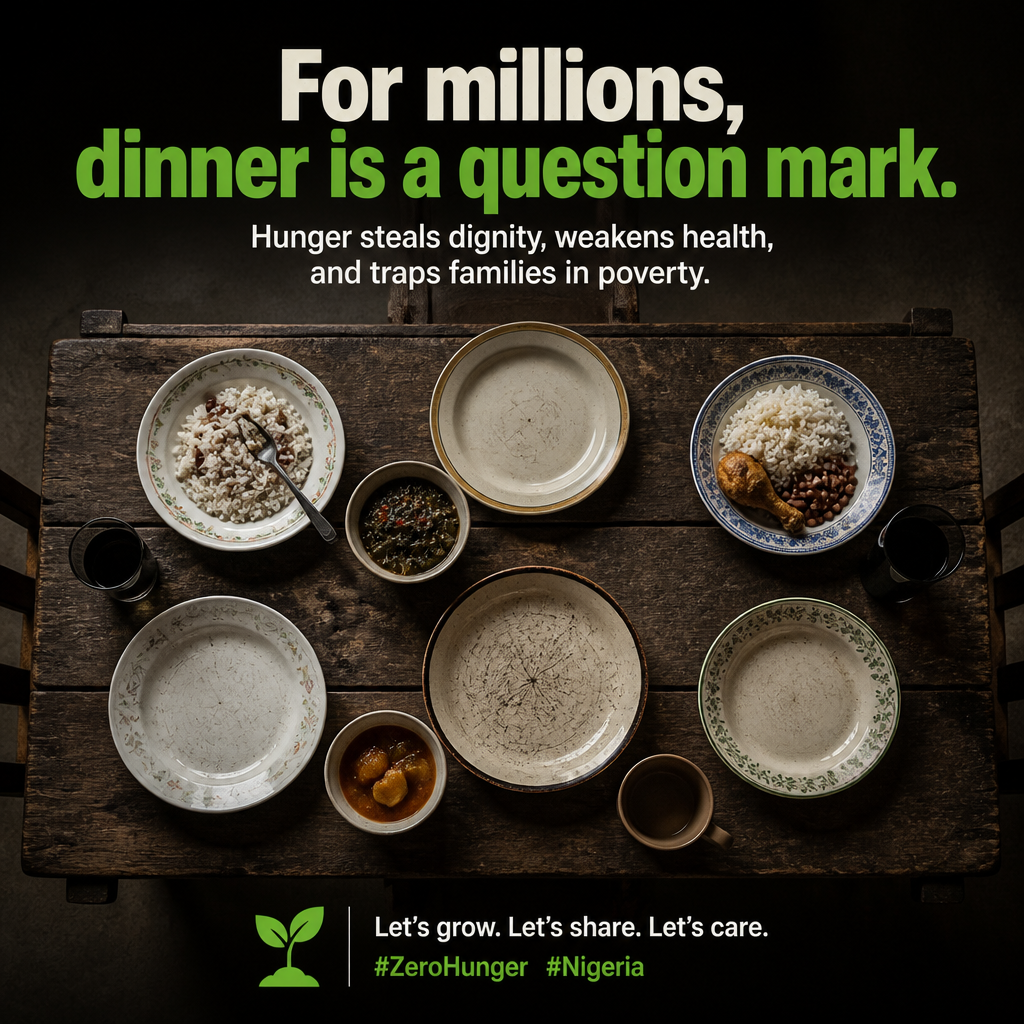
It is knowing that when your children ask, What's for dinner? , you already have an answer. It is walking into a market without calculating which meal to skip because tomatoes, rice, or eggs have become too expensive. It is the confidence that tomorrow's meal is not a question mark.
For millions of Nigerians living below the poverty line, food security means something even deeper. It is not about eating healthy, it is about eating at all. It is the mother who silently sacrifices her own meal so her children can eat. It is the student who attends lectures on an empty stomach. It is the elderly neighbour who waits for the kindness of others before preparing a meal. Hunger is more than an empty stomach; it steals dignity, weakens health, limits learning, and traps families in a cycle of poverty.
Food security is not only the responsibility of governments, farmers, or humanitarian organisations. It begins with us. Every one of us can be part of the solution. Buy from local farmers. Reduce food waste. Share surplus food instead of throwing it away. Support community food drives. Check on the elderly, widows, and struggling families around you. Sometimes, a bag of rice, a basket of vegetables, or even one shared meal can restore someone's hope.
As someone passionate about sustainable agriculture and food systems, I believe that achieving food security is not just about producing more food. It is about ensuring that every person, regardless of their income, has consistent access to safe, nutritious, and affordable food.
A nation cannot truly prosper when millions of its citizens go to bed hungry.
This Monday, let us remember that food is more than a commodity, it is a basic human right, a source of dignity, and the foundation of a productive society. If each of us chooses to make a difference within our own communities, together we can build a Nigeria where no one has to wonder where their next meal will come from.
Because the fight against hunger is not someone else's responsibility, it belongs to all of us.
Let's grow food. Let's reduce waste. Let's share more. Let's care more.