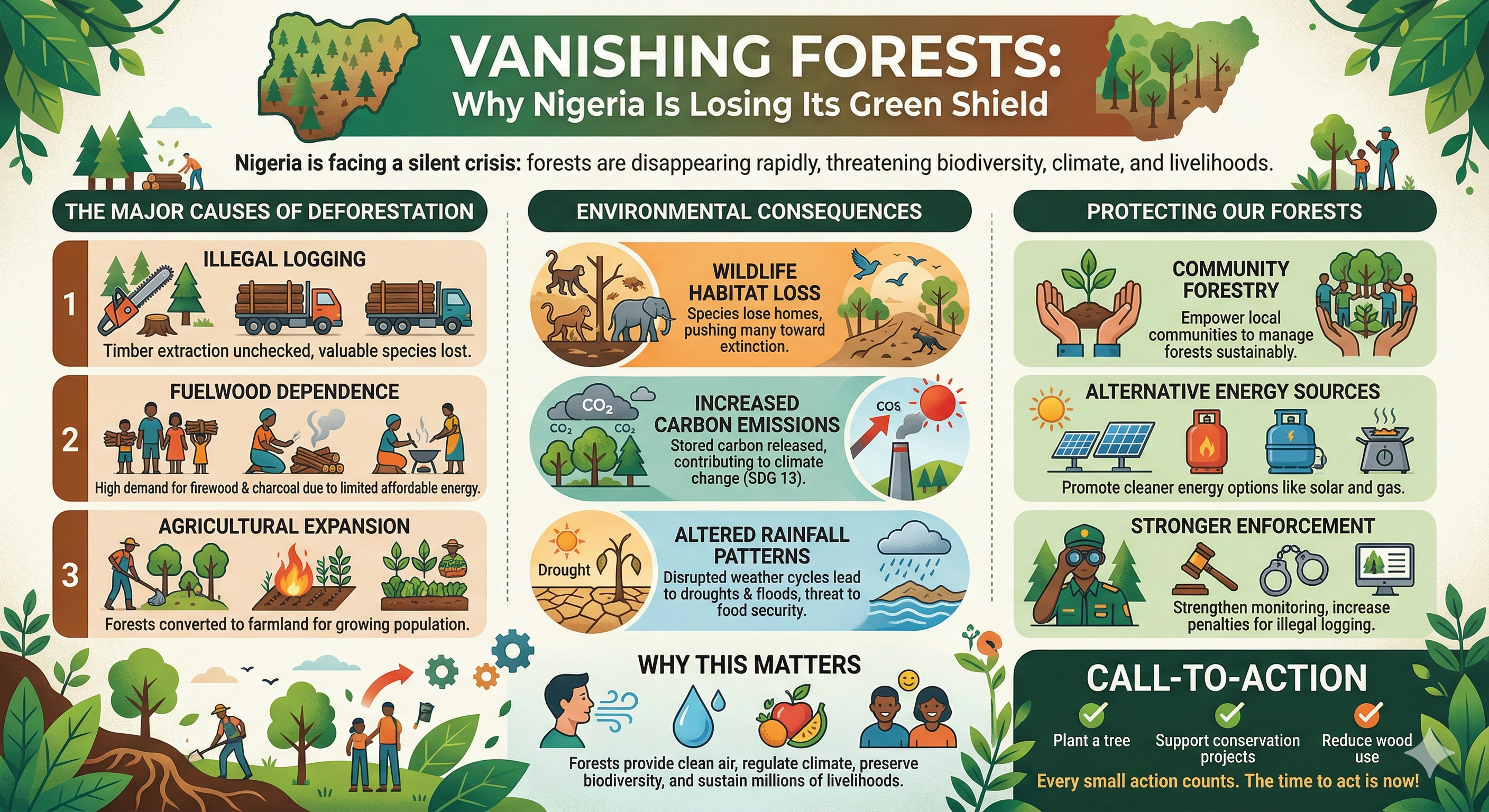
Nigeria is facing a silent but devastating crisis; deforestation in Nigeria is happening at an alarming rate. Forests that once served as a natural shield, protecting biodiversity, regulating climate, and supporting rural livelihoods, are rapidly disappearing.
From the dense rainforests of the south to the savannah woodlands in the north, this loss is not just environmental; it is economic, social, and deeply human. If nothing changes, the consequences will extend far beyond today’s generation.
The Major Causes of Deforestation
1. Illegal Logging
Illegal logging remains one of the most significant threats to Nigeria’s forests. Despite regulations, weak enforcement allows timber extraction to continue unchecked. Valuable tree species are harvested faster than they can regenerate, leaving forests degraded and vulnerable.
2. Fuelwood Dependence
A large percentage of Nigerian households depend on firewood and charcoal for cooking. With limited access to affordable alternative energy, forests become the primary source of fuel. This daily demand steadily strips away forest cover, especially in rural areas.
3. Agricultural Expansion
As Nigeria’s population grows, so does the demand for food. Farmers often clear forests to create new farmland. While this practice practice supports short-term food production, it leads to long-term environmental damage and contributes significantly to biodiversity loss.
4. Housing and Real Estate Development
Nigeria’s growing population and urbanisation have created a significant housing deficit. To meet this demand, forests are increasingly being cleared for residential estates, roads, and infrastructure. In cities like Lagos, Abuja, and Port Harcourt, peri-urban forests are rapidly disappearing as land is converted for real estate development. This form of land-use change is often overlooked, but it plays a major role in deforestation in Nigeria, especially as urban expansion continues without strong environmental planning.
Environmental Consequences
The disappearance of forests is not an isolated problem; it triggers a chain reaction of environmental impacts such as:
1. Wildlife Habitat Loss
Forests are home to countless plant and animal species. When trees are cut down, these species lose their habitats, pushing many toward extinction. This ongoing biodiversity loss weakens ecosystems and reduces nature’s resilience.
2. Increased Carbon Emissions
Forests act as carbon sinks, absorbing carbon dioxide from the atmosphere. When trees are cut or burnt, that stored carbon is released, contributing to climate change. This directly undermines efforts tied to SDG 13 (Climate Action).
3. Altered Rainfall Patterns
Forests play a crucial role in regulating weather patterns. Their loss can disrupt rainfall cycles, leading to droughts in some areas and flooding in others. For a country heavily dependent on agriculture, this is a serious threat to food security.
Protecting Our Forests
The situation is urgent, but not irreversible. Strategic actions can slow and even reverse deforestation in Nigeria.
Community Forestry: Empowering local communities to manage forest resources sustainably can make a significant difference. When people have ownership and responsibility, they are more likely to protect these ecosystems.
Alternative Energy Sources: Promoting cleaner energy options, such as gas, solar cookers, and efficient stoves, can reduce dependence on fuelwood. This is a practical step toward long-term forest conservation.
Stronger Enforcement: Policies already exist, but enforcement is often weak. Strengthening monitoring systems, increasing penalties for illegal logging, and ensuring transparency can help protect remaining forests.
Why This Matters
Forests are more than just trees; they are life-support systems. They provide clean air, regulate climate, preserve biodiversity, and sustain millions of livelihoods. Losing them means losing a critical layer of protection against environmental and economic instability.
Call-to-Action
The responsibility to protect Nigeria’s forests doesn’t lie with the government alone; it belongs to all of us.
Plant a tree or support forest conservation projects. Every small action counts. Whether you plant a tree, reduce your use of wood-based products, or support sustainable initiatives, you are contributing to a greener, healthier Nigeria.
Let’s not wait until the forests are gone. The time to act is now.