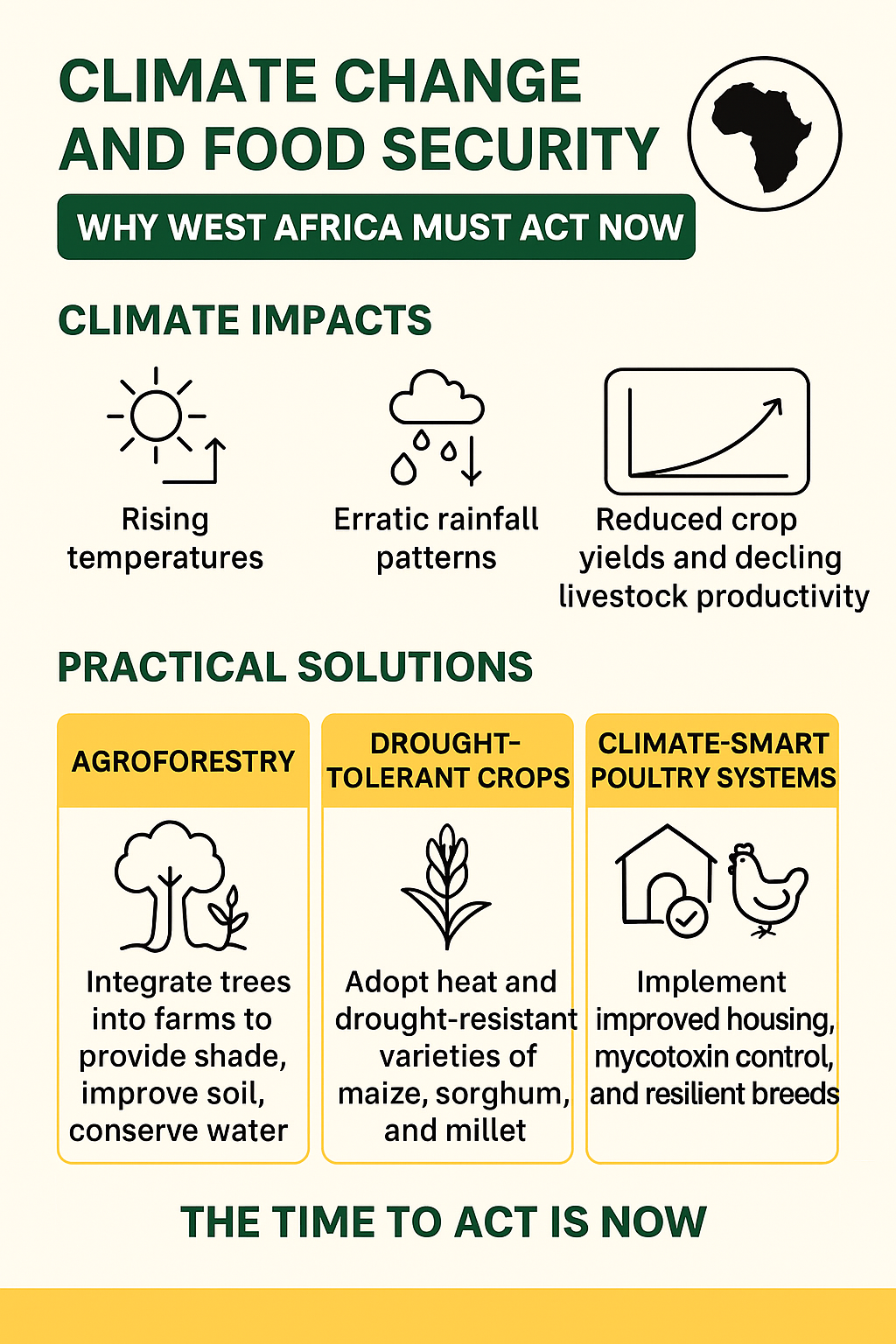
West Africa is at a critical crossroads. Climate change is no longer a distant threat; it is here, in our homes and communities, reshaping our agricultural landscapes and posing a significant challenge to food security across the region.
Rising temperatures, erratic rainfall patterns, and extreme weather events are disrupting farming systems that millions depend on for survival. If urgent action is not taken, the consequences will be severe: reduced crop yields, declining livestock productivity, and increased hunger and poverty. The Climate Challenge Over the past decades, average temperatures in West Africa have steadily increased. This warming trend, coupled with unpredictable rainfall, is wreaking havoc on traditional farming calendars.
Farmers who once relied on predictable wet and dry seasons now face prolonged droughts, sudden floods, and heat waves that damage crops and degrade soils. For crops, the story is grim. Heat stress reduces photosynthesis and accelerates crop maturation, leading to smaller yields. Maize, a staple in many West African diets, is particularly vulnerable to high temperatures during flowering, which can slash yields by up to 50%. Erratic rainfall also means water shortages during critical growth stages, while floods destroy fields and wash away nutrients.
Livestock systems are equally under pressure. Poultry, cattle, and goats are susceptible to heat stress, which reduces feed intake, slows growth, and impairs reproduction. In poultry, high temperatures can lower egg production and hatchability, threatening the supply of affordable protein. Climate change also increases the risk of feed contamination by mycotoxins, harmful compounds produced by fungi that thrive in warm, humid conditions, further compromising animal health and food safety.
Why This Matters for Food Security West Africa’s population is projected to reach over 500 million by 2050, intensifying the demand for food. Yet, climate-induced losses in crop and livestock productivity could push millions into hunger and malnutrition. Women and children in rural communities will bear the brunt, as they rely heavily on agriculture for income and sustenance.
Food insecurity is not just an agricultural problem; it is a social and economic crisis. Reduced yields mean higher food prices, lower household incomes, and increased poverty. Climate change also threatens regional stability, as resource scarcity can fuel migration and conflict.
Practical Solutions for a Resilient Future The good news is that we can act now to build climate-resilient food systems. Here are three practical strategies:
1. Agroforestry: Trees as Allies Agroforestry, which includes integrating trees into farms, offers multiple benefits. Trees provide shade, reducing heat stress for crops and livestock. They improve soil fertility, conserve water, and store carbon, helping mitigate climate change. Species like Gliricidia and Leucaena can be used as fodder trees, supporting livestock nutrition during dry seasons.
2. Drought-Tolerant Crops: Plant breeding and biotechnology have produced crop varieties that withstand heat and water stress. Farmers should adopt drought-tolerant maize, sorghum, and millet varieties to maintain yields under harsh conditions. Governments and NGOs must invest in seed distribution and farmer training to scale adoption.
3. Climate-Smart Poultry Systems: Poultry remains a vital source of protein in West Africa. To protect this sector, farmers can implement climate-smart practices such as: Improved housing with ventilation and cooling systems to reduce heat stress. Mycotoxin control through proper feed storage and use of binders. Resilient breeds that tolerate high temperatures and maintain productivity.
The Time to Act Is Now Climate change is not waiting, and neither should we. Governments, private sector players, and communities must collaborate to implement these solutions. Investments in research, extension services, and climate adaptation programs will be key to safeguarding food security for future generations.
West Africa has the knowledge, resources, and resilience to overcome this challenge, but only if we act decisively today. CLIMATE ACTION NOW !!!!!!