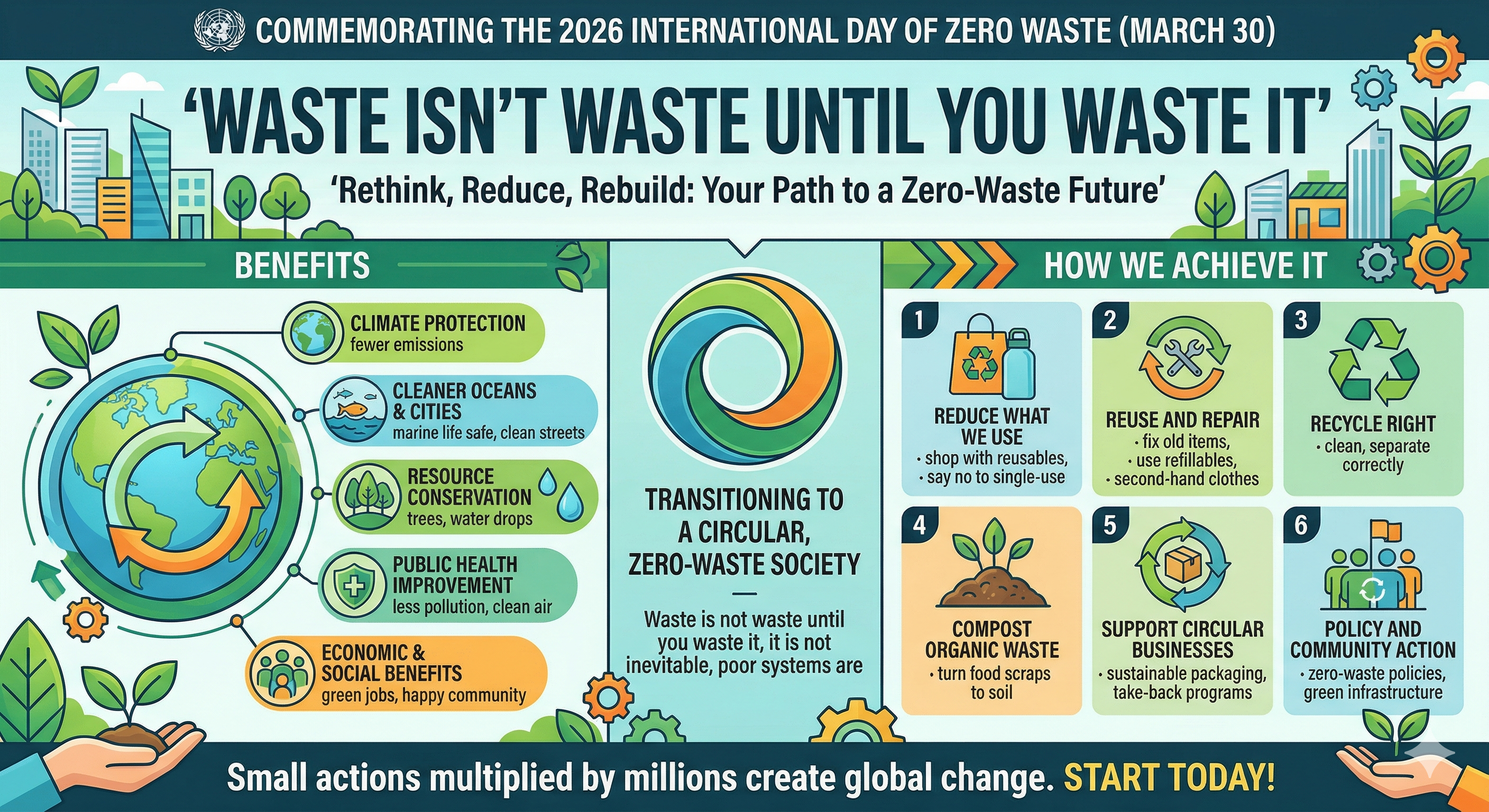
Every year, the world produces over 2 billion tonnes of waste, much of which ends up in landfills, waterways, and the ocean. In response to this growing crisis, the United Nations established International Day of Zero Waste, observed annually on March 30. As we commemorate the 2026 International Day of Zero Waste, the message is clear: waste is not waste until you waste it; it is not inevitable; poor systems are.
This year is a powerful reminder that the choices we make today determine the kind of planet we leave behind.
What Is the International Day of Zero Waste?
The International Day of Zero Waste highlights the urgent need to transition from a take-make-dispose economy to a circular, zero-waste society. It calls on governments, businesses, communities, and individuals to rethink how products are designed, consumed, and discarded.
Zero waste is not about perfection; it’s about prevention, responsibility, and sustainability.
What Does Zero Waste Really Mean?
Zero waste is a philosophy and systemic approach that aims to prevent waste generation at the source, Maximise reuse, repair, and recycling, Minimise landfill and incineration, and Design products and systems where materials are continuously reused
In simple terms, zero waste means nothing is wasted; everything has value.
How Can We Achieve Zero Waste?
1. Reduce What We Use
The most effective waste strategy is not creating waste in the first place. This means buying only what we need, choosing durable products, and rejecting single‑use items.
2. Reuse and Repair
From refillable containers to second‑hand clothing, reuse keeps materials in circulation longer and reduces demand for new resources.
3. Recycle Right
Recycling works best when materials are clean, sorted correctly, and supported by local infrastructure. Proper recycling reduces pollution and saves energy.
4. Compost Organic Waste
Food scraps and organic waste make up a large portion of household waste. Composting turns this “waste” into nutrient‑rich soil.
5. Support Circular Businesses
Choose brands that prioritise sustainable packaging, take‑back programs, and circular production models.
6. Policy and Community Action
Governments and local authorities must support zero‑waste policies, extended producer responsibility, and inclusive waste management systems, especially for informal waste workers.
Benefits of Zero Waste to Planet Earth
✅ Climate Protection
Waste is a major contributor to greenhouse gas emissions. Reducing waste cuts methane from landfills and emissions from production.
✅ Cleaner Oceans and Cities
Plastics and unmanaged waste choke waterways and marine life. Zero‑waste practices help protect ecosystems and biodiversity.
✅ Resource Conservation
Zero waste preserves natural resources like water, minerals, forests, and fossil fuels by keeping materials in circulation.
✅ Public Health Improvement
Cleaner environments reduce toxic exposure, air pollution, and disease risks linked to waste dumping and burning.
✅ Economic and Social Benefits
Zero‑waste systems create green jobs, support small businesses, and empower communities, especially in the Global South.
Why Zero Waste Matters More Than Ever in 2026
With rising urbanisation, climate instability, and global consumption, waste is no longer a local problem; it’s a planetary emergency.
Zero waste offers a pathway to:
Climate resilience
Environmental justice
Sustainable cities
Responsible consumption
By acting now, we move from awareness to impact.
What You Can Do Today
This International Day of Zero Waste 2026, commit to one meaningful action:
✅ Carry a reusable bag or bottle
✅ Start composting
✅ Learn proper waste separation
✅ Support zero‑waste initiatives
✅ Educate others in your community
Small actions multiplied by millions of people create global change.